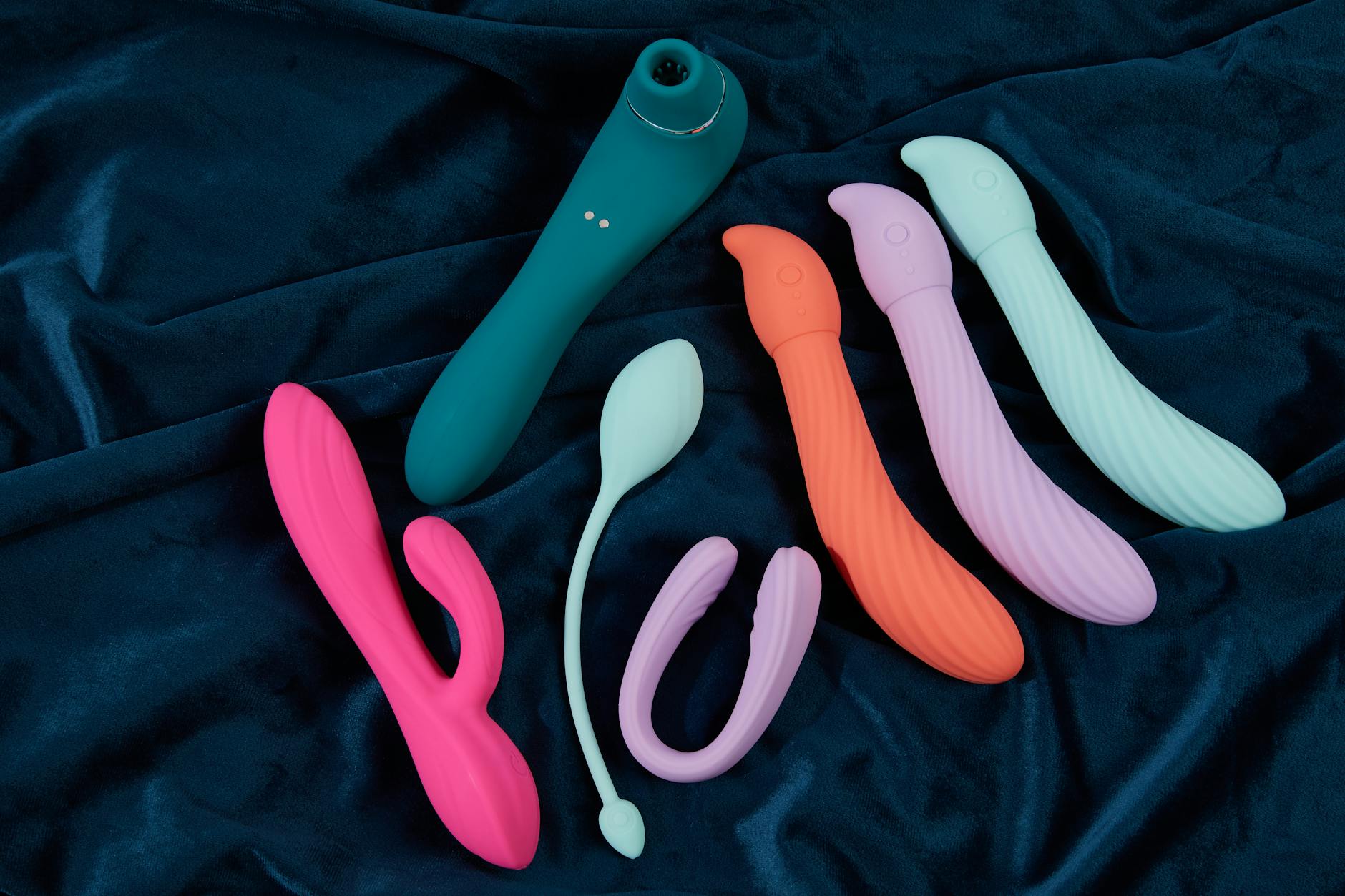
How Lemon Vibrators Compare to Other Clitoral Toys
Suction technology versus traditional vibration. Speed settings versus pattern variety. A straightforward comparison of what works differently and why that matters for your body.
Honestly, the clitoral toy market has exploded in the last five years, and most conversations about it boil down to vibes or suction. That's incomplete. The real difference is in the and how it interacts with your specific body, and that's where lemon vibrators sit in a category of their own.
Traditional clitoral vibrators work by moving back and forth really quickly. Think of it like a tiny jackhammer on your clitoris. You get direct stimulation through motion.
Lemon clitoral vibrators use suction and pulsing air patterns instead. The technology creates a gentle seal and then releases rhythmic waves of suction around the clitoris, not ON it. This matters because your clitoris is not just the visible button. It's a complex internal structure with hundreds of nerve endings that branch inward, and suction reaches those deep structures in a fundamentally different way than vibration.
Research from sex science labs in Germany and the Netherlands has shown that suction-based stimulation activates a broader neural network than traditional vibration. This translates to orgasms that feel different—often more diffuse, sometimes more intense, occasionally both.
Most traditional vibrators give you 3-10 speed levels. Crank it from level 1 to level 10 and you're just going faster.
Lemon vibrators work differently. You typically get a lower speed range (lemon clitoral vibrators max out around 3,000 pulses per minute, while some traditional vibrators hit 9,000+), but the magic is in the patterns. The Lem, for example, offers multiple pulsing sequences. Some are steady. Some build. Some alternate intensity. This pattern approach mirrors how arousal actually works in your body—it's not about going harder, it's about varying the type of input.
For some people, patterns feel way more sustainable than chasing higher speeds. Your body doesn't adapt as quickly to variety.
With a traditional vibrator, you generally feel vibration. It's a buzzing sensation, and the smaller or more powerful the motor, the more you feel the vibration itself (what sex toy reviewers call "buzz").
With suction, you feel pressure, release, and a gentle pulling sensation. There's almost no buzz. For people with sensitive clitorises, or those who find traditional vibration uncomfortable after a certain point, this is a game-changer.
I work with a lot of clients who say they can't orgasm with traditional vibrators because the sensation eventually feels numb or overwhelming. When they switch to a lemon vibrator, that numbness doesn't happen. The mechanism is different enough that your nerve endings don't habituate the same way.
Traditional vibrators, especially ones with powerful motors, drain faster. They're also louder—sometimes significantly louder. If you live with a partner, roommate, or thin walls, this matters.
Lemon vibrators are quieter because suction technology doesn't need a screaming motor. You also typically get 2-3 hours of continuous use per charge, which is solid. The trade-off is that you won't get the full-throttle intensity of some traditional vibrators, but honestly, if you're using a toy for longer than 30 minutes at a stretch, speed isn't usually your bottleneck.
Here's something nobody talks about clearly enough: different clitoral toy designs fit different vulva geometries.
Traditional vibrators come in endless shapes, from bullets to wands to rabbits. This variety is great for people who need different body positioning to reach the right angle. Some people's clitorises are more external and forward-facing. Others' are more tucked or to the side.
Lemon vibrators are designed around the idea that you hold the toy steady and let suction do the work. This means positioning is less critical. For people with internal clitorises or who find that wand-style toys require awkward angles, suction toys are often easier to use.
That said, if you have vulva anatomy that's quite sensitive to suction (rare, but real), a traditional vibrator might be a better fit.
You'll find traditional vibrators at every price point, from $20 to $300. Lemon clitoral vibrators typically start around $65-$89 because the suction technology and the engineering required to make it quiet and reliable costs more than a simple motor.
But here's the thing: a well-made lemon toy will outlast a cheap traditional vibrator by years. The motor in a good suction toy degrades more slowly than the motors in budget vibes that burn out fast.
One reason lemon vibrators improve sensitivity over time is that the stimulation pattern doesn't cause the same kind of nerve adaptation that very high-speed vibration does. If you've noticed that traditional vibrators feel less and less intense the more you use them, suction-based stimulation might break that cycle.
This doesn't mean traditional vibrators are bad for sensitivity. It means if you're experiencing desensitization, switching mechanisms entirely—not just to a different vibrator, but to a fundamentally different technology—often helps reset your body's responsiveness.
I don't want to oversell lemon vibrators. They're not the right tool for everyone.
Traditional vibrators are better if you need deep internal stimulation (like a rabbit or curved vibrator reaching a G-spot). They're better if you prefer very high-speed, intense sensation. They're better if you like holding something with a grip and using it more actively.
They're also more versatile for partner play because the shapes vary so wildly. A wand vibrator is easy to use during partnered sex in lots of positions. A suction toy requires a bit more intention about positioning.
Here's what a lot of my clients discover: you don't have to choose. Some people rotate between a lemon vibrator for solo play and a different toy for partnered situations. Others use both in the same session.
If you're using lemon vibrators with a partner, you can layer a traditional vibrator for penetration while using suction on the clitoris. The different sensations can amplify each other in ways that a single tool can't.
If you've been using traditional vibrators and they still feel great, keep using them. If you're curious whether something different might feel better, or if traditional vibrators have stopped working the way they used to, a lemon clitoral vibrator is worth trying because it's not just a faster version of what you already know. It's a genuinely different mechanism.
Most of the time, people who switch to suction technology don't go back entirely—they just add it to their rotation.
Better is subjective, but they're different. Lemon clitoral vibrators use suction instead of vibration, which reaches deeper nerve tissue and often feels less buzzy. For people who experience numbness with traditional vibrators or want pattern variety over pure speed, lemon toys often feel superior. For people who love high-intensity vibration or need internal stimulation, traditional vibrators might suit you better.
Yes, often more comfortably than traditional vibrators. Because suction doesn't create the same direct friction and buzz, it's gentler on sensitive tissue. Start on lower patterns and work up. If you find that any toy causes pain, that's your signal to pause and consider whether you need a different approach entirely—not just a different toy.
A good-quality lemon vibrator typically lasts 3-5 years of regular use before the motor degrades. Many traditional vibrators last 1-2 years because the small, high-speed motors burn out faster. Durability depends on the brand and build quality, but suction technology generally holds up longer.
Yes. Lemon vibrators produce minimal noise because suction technology doesn't require a loud motor. Traditional vibrators, especially ones with powerful motors, can be quite loud. If discretion matters to you, a lemon toy is usually the better choice.
Absolutely. Use water-based lubricant to help create a better seal and reduce friction. Silicone-based lubricants can damage silicone toys, so stick to water-based. A little lube makes suction toys feel smoother and can improve comfort.
Mostly yes. Because suction toys don't require a specific angle the way some wand vibrators do, they work well for different vulva shapes and sizes. That said, if you have very sensitive skin or anatomy that doesn't respond well to suction sensation, you might prefer a different mechanism. The best way to know is to try.
The clitoral toy landscape is bigger than just "vibration or nothing." Lemon clitoral vibrators represent a genuinely different technology that works better for some people and perfectly fine for others. The fact that they're becoming more popular isn't hype. It's because suction-based stimulation solves real problems that traditional vibrators don't.
If you've been curious whether your current toy setup is actually optimal for your body, this comparison might help you figure out whether something different is worth exploring. And if you want to talk through what might work best for your specific situation, we're here.