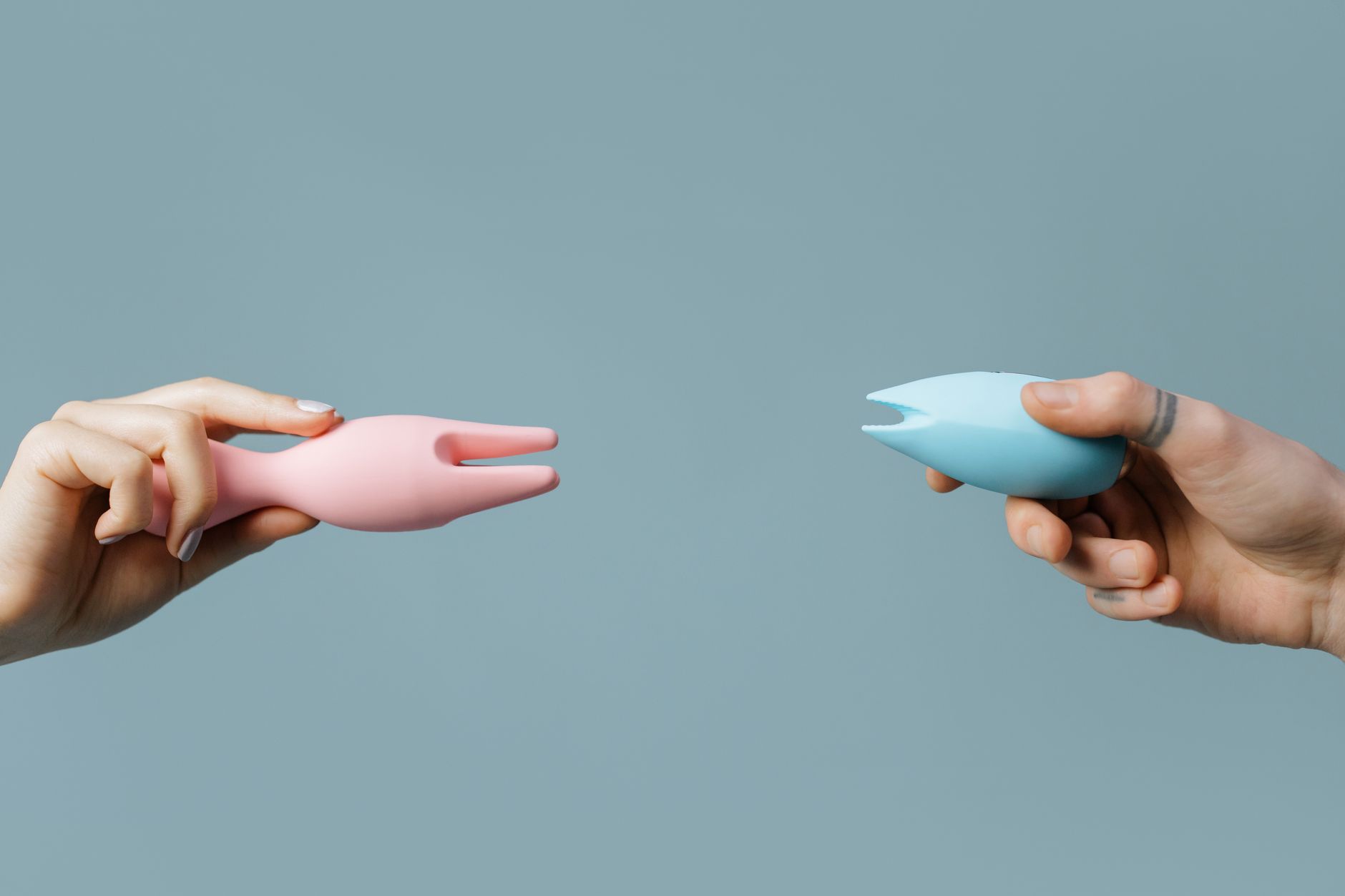
How Lemon Vibrators Feel Different When You Take a Tolerance Break
Your body recalibrates faster than you think. What happens neurologically when you step away from your lemon vibrator, and how to reconnect with fresh sensation.
You skip using your clitoral vibrator for a few weeks, a few months, sometimes longer. Life gets busy. Interest dips. Maybe you're traveling, dealing with stress, or just in a season where pleasure isn't on the menu. Then one day you come back to it, and something feels off. Or weirdly, something feels better. What's going on inside your body when you've been away from your lemon vibrator is more interesting than you'd think.
Tolerance is real, and it's not a personal failure. When you use a vibrator regularly, your nerve endings adapt to consistent stimulation. This is called sensory adaptation, and it's a feature of how your nervous system works, not a bug. The same nerves that feel incredible sensation the first time start asking for "more" to achieve the same result.
Think of it like listening to the same song on repeat. The first time you hear it, every note lands. After the hundredth time, you need to turn up the volume to feel the same thing. Your ears haven't broken. Your brain has just filed that stimulus under "normal background noise."
With vibrators, tolerance typically builds gradually over weeks or months of frequent use. Some people notice it happens faster if they're using the same intensity, pattern, or positioning every single time. Others barely notice it at all. Genetics, baseline nerve sensitivity, hormones, and even stress levels all play a role.
When you step away from your lemon vibrator for even two to three weeks, something shifts. Your nerve endings essentially "forget" the constant input. The sensation pathways in your brain quiet down. You're not losing sensitivity, and you're not damaging anything. You're just resetting your baseline.
This is where a lot of people get confused. Some worry they've permanently changed their capacity for pleasure. Others think they've developed a dependence on vibrators. Neither is what's happening. What's actually happening is neurological adaptation working in reverse. Your nervous system is downgrading "vibrator stimulation" from "this is normal" back to "wow, this is interesting again."
The time it takes to reset varies wildly. Some people feel the difference after two weeks. Others need a full month or two. A few don't notice any change at all. The good news is that the reset almost always happens completely. There's no point of no return here.
This is where people get surprised. You'd expect that taking a break means you'd be more sensitive when you come back, right? Sometimes that's true. More often, there's an awkward middle ground.
The first session after a long break can feel intense because your nervous system isn't primed for it anymore. Even a lower setting might feel stronger than you remember. This can be genuinely pleasurable, or it can feel like too much. Some people describe it as being "out of practice," which is a useful metaphor, even though anatomically that's not quite what's happening.
Other people come back and find that nothing feels like much of anything. This usually means your nervous system is being cautious, waiting for context clues that this is safe and normal. Give it a few minutes. Real sensation typically builds once arousal kicks in.
Let's be practical. If you're reconnecting with your lemon vibrator after time away, here's what I tell people.
Start lower than you think you need. Don't jump to intensity level three or four. Go to level one or two and give your body ten to fifteen minutes to remember how to respond. This is not settling. This is strategic.
Treat it like a first date with your own body. Pay attention. Notice what feels different, what feels better, what's actually pleasurable versus what you're doing out of habit. Your preference might have shifted. Honor that.
Skip the time pressure. After a break, your body might take longer to build to orgasm. This is normal. Budget extra time and skip the expectation that you'll finish quickly. Some of the best sessions happen when you're not racing toward the finish line.
Change something intentionally. If you always used the same pattern, try a different one. If you always were in the same position, shift. This gives your nervous system fresh input and often jumpstarts sensation better than repeating exactly what you did before.
Warm up first. Five minutes of manual touch, fantasy, or whatever gets your baseline arousal going before you introduce the vibrator. Your nervous system responds better when there's already some electrical activity happening in the pleasure centers.
Here's what's quietly radical about taking breaks from your lemon vibrator: they're actually healthy. I don't mean you need to force them. But when they happen naturally, they reset your baseline. They give you the neurological equivalent of a palate cleanser.
People who take regular breaks, even unintentionally, often report that they feel more sensation variety over time. One month the suction on a lemon clitoral vibrator feels electric. Three months later it feels warm and focused. A year in, maybe it feels like something else entirely. This isn't your body breaking down. This is your system staying responsive because the input hasn't stayed static.
Conversely, people who use the same vibrator at the same intensity every single day for months on end sometimes hit a wall where nothing feels good anymore. That's the tolerance ceiling. But the solution isn't abandoning vibrators. It's rotating them, varying intensity, and sometimes, yes, taking a break.
There's a meaningful difference between "I've been busy and haven't touched my vibrator in two months" and "I've lost all interest in pleasure and can't imagine coming back to it." The first is a natural rhythm. The second might be worth checking in with yourself about.
If you're noticing that stepping away from vibrators coincides with depression, stress, or a shift in sexual desire in your relationship, a break isn't necessarily the fix. Those deserve attention on their own. A vibrator is a tool for pleasure, not a therapist. If the break feels less like a pause and more like avoidance, or if pleasure itself has stopped mattering to you, that's worth exploring separately.
But if you're simply in a phase where sex toys aren't on your radar, and you're happy without them? That's fine too. Pleasure doesn't have to be constant to be real.
Most people who take a break and come back to their lemon vibrators report something interesting. They feel more sensation, more variety, and sometimes more intensity. They're also often less dependent on having "perfect" conditions. They've somehow reset their expectations.
Some people describe it as coming home to their pleasure. Others say it's like they're exploring for the first time again. What I hear most often is this: "I forgot what it actually felt like. I was just going through the motions before."
That reset is valuable. Whether you're taking a three-week break because life is chaos, or you're stepping back for a month because you're curious about what shifts, your nervous system will recalibrate. The good news is it works consistently. You don't lose the ability. You just press pause and then press play again.
Tolerance timelines vary widely, but most people notice a shift toward needing higher intensity after four to eight weeks of regular daily use. If you're using your vibrator a few times a week, you might not notice tolerance building at all. Genetics, stress levels, and baseline nerve sensitivity all matter. Some people feel tolerance creeping in after two weeks. Others use the same vibrator at the same intensity for months without any drift in sensation.
Not necessarily more sensitive overall, but your nervous system will reset its baseline. You'll regain responsiveness to the vibration after time away. A two to four-week break usually resets most of the adaptation. The sensation might feel stronger, or it might just feel new again. Both are real changes, even though they're not the same thing.
No. There's no point of permanent damage where vibrators stop working. Your nervous system is not a battery that runs down. It's a constantly adapting system. Even if you've used a vibrator intensively for years and notice tolerance, stepping away and coming back resets it. The reset might take longer if tolerance was built over years, but it does happen.
No. Taking a break is neutral. It's neither good nor bad. Some people take breaks and love the reset. Others don't notice any difference when they come back. The only time a break becomes a problem is if it's driven by shame, pressure, or a complete loss of interest in pleasure alongside other signs of depression or relationship distress.
Yes, start lower than you used to, even if it feels weird. Your nervous system won't have the baseline hum it had before. Level two or three might feel as intense as level four used to. You can always turn it up. It's harder to recover from overstimulation on the first session back. Give yourself ten to fifteen minutes at a lower setting before increasing intensity.
Yes, but you don't need to be rigid about it. Varying intensity, patterns, and timing naturally prevents tolerance from building fast. Using a vibrator four times a week instead of daily slows adaptation. Alternating between different sensations and tools helps too. But honestly, if you enjoy daily use and don't mind managing tolerance with breaks or intensity variation, that's fine. There's no "correct" frequency.
Here's what matters: your capacity for pleasure through vibration doesn't expire. When you take a break, your nervous system doesn't store that time as a loss. It stores it as a reset. Come back to your lemon vibrator whenever you're ready, start low, give yourself time, and trust what your body tells you. The sensation is still there. It's just waiting for you to be curious about it again.
If you're navigating changes in pleasure or sensation and want support, we're here. Reach out at /contact to chat.