Let's name the thing nobody says out loud
Penetration hurts. Or it triggers trauma. Or you're healing from surgery. Or you simply don't want it. And somewhere along the way, you absorbed the message that this means your sexual life has to shrink.
Pleasure without penetration
When internal stimulation isn't possible, isn't wanted, or isn't healing. What your clitoral vibrator becomes in its place, and how to unlock pleasure that's just as complete.
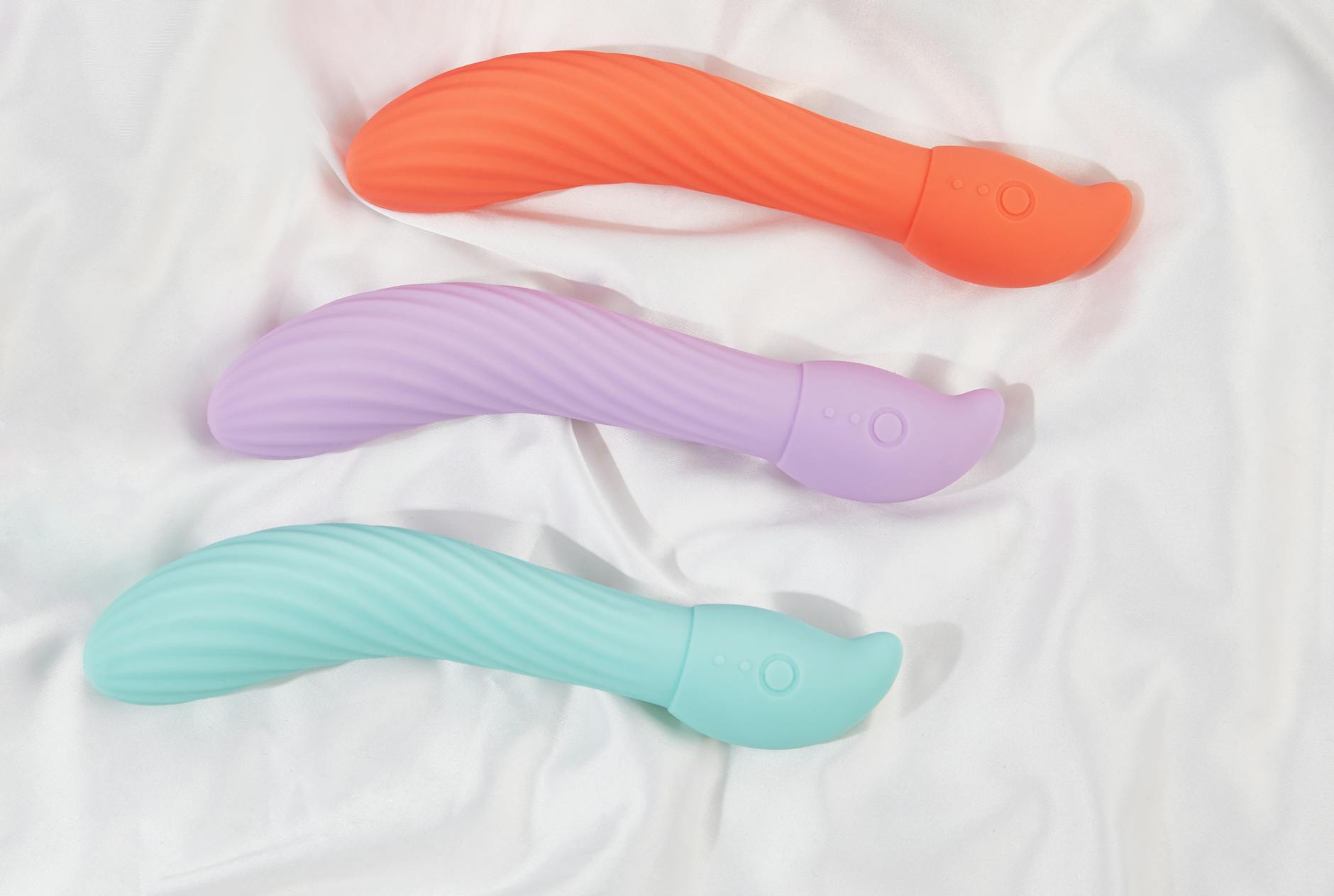
Penetration hurts. Or it triggers trauma. Or you're healing from surgery. Or you simply don't want it. And somewhere along the way, you absorbed the message that this means your sexual life has to shrink.
It doesn't. This is exactly where lemon clitoral vibrators become not a consolation prize but your main event.
Here's the clinical fact that gets buried in most conversations about pleasure: the clitoris contains over 8,000 nerve endings, all of which are absolutely capable of producing profound orgasms without a single moment of penetration. The vulva as a whole has dense nerve networks that have nothing to do with vaginal depth or penetrative sensation.
When penetration is off the table, you're not working around a limitation. You're actually accessing some of the most sensitive, responsive tissue your body has. A lemon clitoral vibrator like the Lem is engineered specifically to stimulate this area with precision that most penetrative experiences can't match.
I work with people across all kinds of situations. Postpartum healing. Vaginismus. Endometriosis. Previous sexual trauma. Waiting periods after gynecological procedures. Religious or personal boundaries around penetration. LGBTQ+ couples who've never centered penetration in the first place. None of these are edge cases. They're just different expressions of normal sexuality.
Three foundational shifts happen when penetration isn't in the picture.
First, you slow down. Without the pressure to "progress" to penetration, many people report that the buildup becomes the main course. You're not racing toward a checkpoint. You're exploring the landscape of arousal itself.
Second, you get specific feedback. A lemon vibrator gives you immediate, granular information about what feels good. Pattern 3 vs. Pattern 5. Direct contact vs. through fabric. Steady pressure vs. alternating rhythm. This data builds your understanding of your own body in ways that generalized penetration often doesn't.
Third, you can stay present. When penetration has caused pain or trauma, the nervous system is primed to protect you. That protective instinct is intelligent. It's keeping you safe. But it also makes pleasure harder to access. External stimulation, especially with a tool specifically designed for the clitoris, often feels safer and more manageable to the nervous system, which means you can actually drop into sensation rather than monitoring for pain.
Let me give you the practical part, because technique matters here.
Position. You need access and comfort. That might be lying on your back with a pillow under your hips (elevation helps with blood flow). It might be sitting upright with legs extended. It might be on your side. The clitoris is accessible from almost any position, so choose based on what lets your body relax. If you're working with a partner, side-by-side often creates the least pressure.
Fabric. Underwear on or off? Fully clothed or not? Some people find that the slight texture of fabric intensifies sensation in the best way. Others need direct contact. You're not doing it wrong either way. The lemon vibrator works through most fabrics, so test what feels right for your nervous system.
Lubrication. External stimulation benefits from lubrication the same way penetration does, even though it's easy to forget. A water-based lubricant makes the sensations feel smoother and reduces friction that might feel sharp rather than pleasant. It's not about "needing" lube. It's about enhancing what you're already feeling.
Duration and pressure. Without the goal of penetration, you can stay in the buildup phase much longer than you might otherwise. That's intentional. Let arousal deepen over 15 to 25 minutes. Start with lighter pressure. You can always increase intensity. It's harder to dial back once you've overstimulated.
Here's something that doesn't get discussed enough: if penetration has caused pain or fear, your nervous system learns that the penetration pathway is unsafe. That learning is protective. It's not a problem to solve. It's information to respect.
When you use external pleasure tools instead, you're actually rewiring that pathway. You're saying to your body: this is where safety is. This is where pleasure is. Over time, through repeated positive experiences with external stimulation, your nervous system often becomes more regulated overall. You might find that other forms of touch, including penetration if you ever want it again, feel less threatening.
But here's the important part: that's a side effect, not the goal. The goal is pleasure now, in this body, in this moment, without penetration.
If you're healing from trauma, working with a trauma-informed therapist alongside your own exploration with a lemon vibrator can anchor that rewiring. You're not white-knuckling your way to pleasure. You're actually changing your nervous system's relationship to sensation.
If you have a partner, the conversation here is crucial. And I mean the actual conversation, not the awkward preamble.
The clearest version is something like: "Penetration isn't working for me right now, and that's not going to change by trying harder. But I want to explore pleasure with you in other ways. I'm interested in using a lemon vibrator together, and I want to know what that sounds like to you."
Notice what's missing: apology, explanation of why, suggestion that this is temporary or a phase you're moving through. You're stating a fact and proposing a direction.
From there, partners often have their own questions. "Will you want penetration again?" "Is this about me?" "What do I do?" These are fair questions, and they deserve straight answers. But they're separate conversations from the physical exploration itself. Don't solve them in the same session where you're introducing external pleasure.
Many couples find that incorporating a lemon clitoral vibrator actually deepens intimacy because it removes the pressure on penetration to be the entire sexual experience. Your partner can be present with you, learning your body's responses, exploring sensation together, without carrying the weight of being "enough."
Honestly though, if you've spent years believing that "real" sex involves penetration, the first time you use a lemon vibrator as your primary source of pleasure can feel like you're settling. You're not.
Start solo if that feels easier. Learn what your body responds to. Find your rhythm. Notice what patterns, pressures, and durations actually create sensation. This information is valuable whether you're partnered or not.
Then, if you want to bring a partner into it, you already know what works. You're not figuring it out under pressure. You're teaching someone you trust about your own pleasure.
One last thing: pleasure without penetration is not a consolation prize for people who "can't" have penetration. It's what a lot of people actually prefer once they try it. The depth, the intensity, the psychological freedom of not being invaded. It's complete unto itself.
Completely. The clitoris has more nerve endings than the entire penis, which is why external clitoral stimulation often produces more intense orgasms than penetration alone. Many people report their most powerful orgasms come from external stimulation specifically.
This is a belief, not a fact. Sex is whatever you both agree it is. If your partner is struggling with the idea that penetration is optional, that's a values conversation that belongs outside the bedroom. You might say: "My pleasure and your pleasure matter equally. Penetration isn't working for me right now. I want us to explore what does." If they're unwilling to engage with that, you might benefit from working with a couples therapist.
Completely normal. Your body and nervous system have learned a particular pathway to pleasure. When you shift that pathway, it takes time for arousal to build in the new way. That's not a problem. That's adaptation. Give yourself 15 to 25 minutes and let it unfold.
Yes, and this is actually one of the most healing uses of external pleasure tools. A lemon clitoral vibrator gives you control, predictability, and direct access to sensation without the vulnerability of penetration. Working with a trauma-informed therapist alongside solo exploration can help your nervous system feel safer. Start with lower intensities and let yourself progress at your own pace.
No. Using external stimulation doesn't change your capacity for penetration. It just gives you another option. Some people find that reduced pressure around penetration actually makes them more interested in it eventually. Others find that external pleasure becomes their preference. Both are fine.
External pleasure with a lemon vibrator is complete on its own. You don't need a partner, you don't need penetration, and you don't need to want either of those things to have a rich sexual life. Solo pleasure is sex. It counts. It matters.
Penetration is one option among many, not the only expression of sexuality that counts. When it's off the table, you're not losing access to pleasure. You're actually gaining access to some of the most sensitive, responsive tissue your body has. A lemon clitoral vibrator is built specifically for this territory. It's where the real depth of external pleasure lives.
If you want to explore this further or work through specific concerns with a professional, we're here to help. Reach out at /contact.