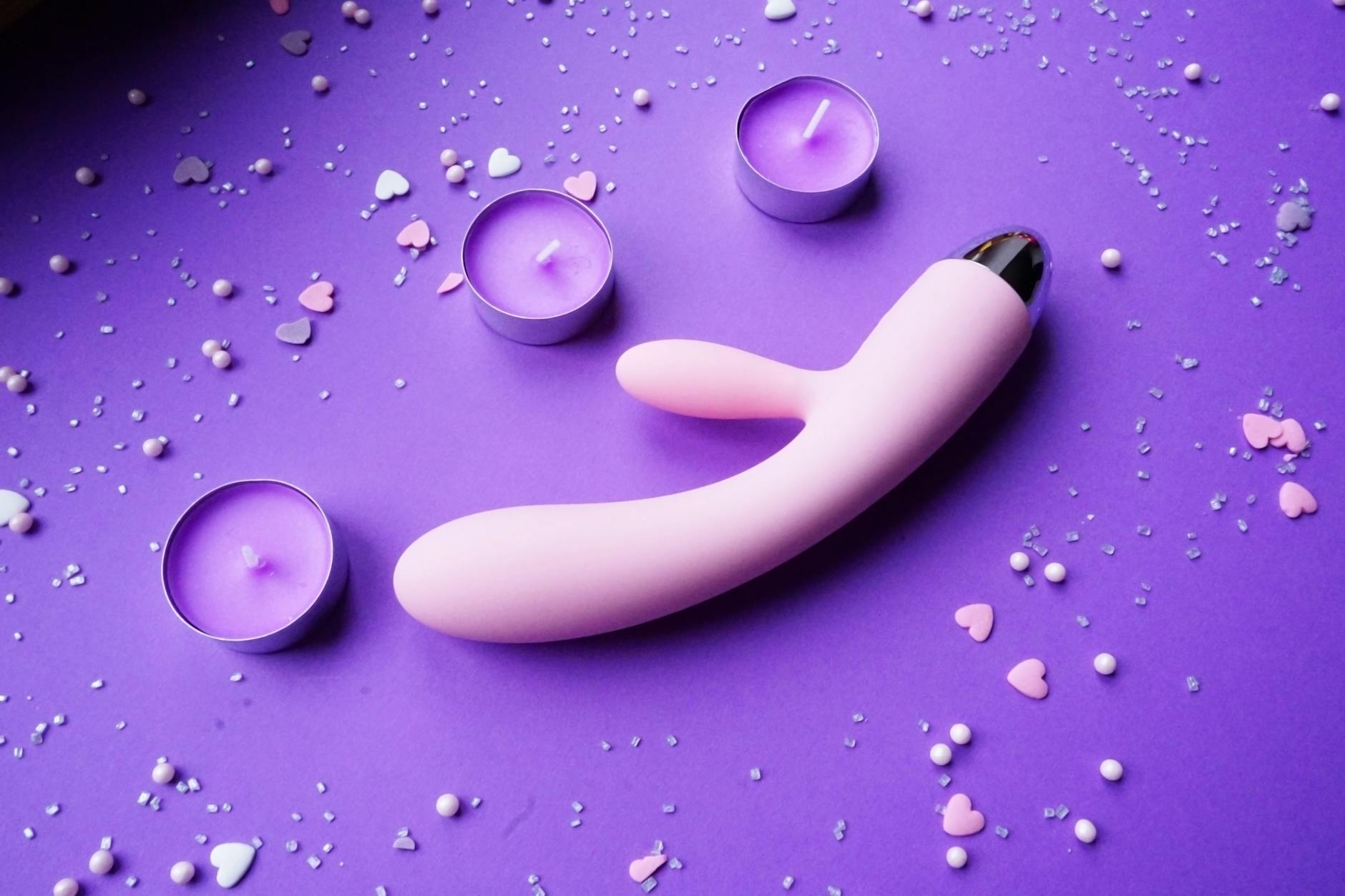
You're nervous about bringing this up. That's normal. What's weird is how much energy we spend imagining your partner's reaction instead of just asking them. Most people want their partner to feel good. Most people are curious. Most people are relieved when someone else opens the door to this conversation first.
Three things are probably happening in your head right now.
First, you're worried this says something about your partner. Like using a lemon clitoral vibrator means they're not enough. That's backwards. Using tools in sex doesn't diminish your partner. It expands what's possible. A partner who wants you to feel good will understand this immediately.
Second, you're scared of shame. We grow up with the message that wanting anything sexual makes us greedy or damaged. Then we internalize that and project it onto our partner. But shame dies the second you name it out loud to someone who cares about you. Most of the time, it evaporates faster than you'd expect.
Third, there's ambiguity about timing and framing. You don't know if you should bring it up in the bedroom, over dinner, via text. You don't know if you should apologize, educate, or just show up with the vibrator one day. This guide is going to solve that.
Pick a time when you're both calm, clothed, and not about to have sex. This sounds formal, but it's the opposite. Bringing it up outside the bedroom actually makes it feel more casual. You're not asking permission in the moment of vulnerability. You're having a regular conversation.
Here's the frame that works best:
"I've been thinking about something that might feel really good, and I wanted to run it by you. I've been curious about using a lemon vibrator sometimes when we're together. I'm interested in this because I want to explore what feels best for my body right now. Would you be open to trying that together?"
Notice what's happening there. You're not apologizing. You're not saying "my body isn't responding well to what we're doing." You're not framing it as a fix for a broken thing. You're saying you want to explore. You're inviting them in. You're asking, which respects their autonomy too.
Most partners will respond with curiosity or immediate yes. Some will need a beat to sit with it. That's fine. Don't fill the silence. Let them think.
If your partner seems unsure, the most useful thing you can do is make space for their feelings without defending yourself.
"What's coming up for you?" is a better question than explaining why they're wrong to feel hesitant. Listen to what they actually say. Sometimes it's insecurity. Sometimes it's unfamiliar territory and they need reassurance that they're still central to the experience. Sometimes they're worried about logistics.
Common hesitations and how to meet them:
"Does this mean I'm not enough?" The answer is no, and here's why: pleasure has nothing to do with measurement. A lemon clitoral vibrator doesn't replace intimacy. It adds sensation. You use deodorant even though you like how your partner smells. You take vitamins even though you love food. Adding a tool doesn't subtract anything from what you already have.
"I don't know if I'll know what to do with it." Perfect. You'll figure it out together. The learning curve is part of the adventure. Some of the best conversations I see happen when couples are laughing because they're trying something new and don't have it figured out yet.
"This feels clinical or unromantic." It doesn't have to be. You can have a lemon vibrator and also have candlelight, slowness, presence. Tools and intimacy aren't opposites. Most partners find that attention to pleasure actually deepens connection because it says "I care about how this feels for you."
Once you've had the conversation, you get to decide how to introduce the physical reality.
Option one: you bring it out when you're already intimate, ask if they want to try it, and go from there. Low pressure. You can start with just exploring sensation together before it becomes part of sex.
Option two: you unpack it beforehand, show them how it works, let curiosity do the work. "Here's the Lem. It uses suction instead of vibration. Want to feel how it works?" People are usually curious. Curiosity leads to play.
Option three: you use it alone first while they watch, and they decide if they want to join. This takes the pressure off them and shows you're comfortable with it, which usually makes them more comfortable.
The frame that matters most: this is exploration, not performance. You're not trying to "do it right." You're trying to feel good. The best lemon vibrator sessions I hear about happen when people stop worrying about doing it right and start paying attention to what actually feels good in real time.
I want to flip the script for a second. You've spent this whole time worrying about your partner's reaction. What if I told you most partners are actually relieved?
Most people with partners feel pressure to be the sole source of their partner's pleasure. That's heavy. When someone brings in a tool and says "this helps me feel good," there's actually relief in that. It's not rejection. It's permission to relax.
Also, watching your partner experience something that makes them feel really good is genuinely arousing for most people. Pleasure is contagious. When your partner sees you using a lemon clitoral vibrator and you're fully experiencing it, most partners become more engaged, not less. They want to participate. They want to be part of it.
Don't have a debriefing conversation immediately after unless you're both energized to do so. You don't need to analyze it. If it felt good, do it again. If something felt off, you can mention it casually later. "I want to try a different position next time" or "Can we slow down the build?" Couples who can talk about sex casually, outside the bedroom, without making it a big clinical thing, are couples who actually enjoy sex more.
If it didn't feel good for either of you, that's data too. Maybe the positioning wasn't right. Maybe the timing was off. Maybe lemon vibrators just aren't the move for you two right now. All of that is fine. You tried something. You communicated about it. That's actually the win, not the sensation itself.
Here's what I notice after two decades of working with couples: the ones who have the best sex lives aren't the ones with the most chemistry. They're the ones who can ask for what they want and listen when their partner does the same. They're the ones who see pleasure as something you build together instead of something that just happens.
Bringing a lemon vibrator into your sex life is really small. But it requires you to do something much bigger: to say out loud that you want to feel good, that you're curious about your own body, and that you want your partner to be part of that. That's the brave part. The vibrator is just the tool.
Your partner will probably like this more than you expect because what you're really offering is honesty. You're saying "I trust you with this part of myself." That kind of vulnerability usually brings partners closer, not further apart.
You bring it up and they say no. Ask why. Don't assume you know. "I'm not interested in that" is different than "I feel insecure about this." One conversation closes. The other one opens. Listen for which one it actually is. If they're genuinely not interested, you get to decide if this is a dealbreaker or something you explore on your own.
You try it once and they don't want to do it again. That's okay. Not everything lands. You don't have to make them like it. You also don't have to stop using it yourself. Some couples integrate vibrators together sometimes and solo sometimes. Both are normal.
They want to use it but you're not comfortable with them controlling it. Say so. "I'd rather lead this" is a full sentence. You get to have preferences about your own body. A good partner respects that. If you want to build comfort, you can start with them just watching, then touching you while you use it, then gradually moving to more participation.
If you're looking for more guidance on sensitivity and how different bodies respond to clitoral vibrators, our post on how lemon vibrators feel on different bodies dives into that. And if you're still deciding whether a lemon clitoral vibrator is right for you, the complete buying guide walks through the options.
You're going to have the talk. You're going to feel nervous beforehand. You're going to feel relief during it. You're probably going to feel proud afterward because you did something brave.
Your partner is going to listen. They're probably going to ask questions. They're very likely going to be curious. And if they're not? That's information too, and you'll figure out what it means from there.
But most of the time, the conversation goes better than the story you've been telling yourself in your head. Most partners want their partner to feel good. Most people are attracted to confidence and honesty. Most of the time, this is the beginning of something better, not a risk.
This is the most common fear, and it's worth naming directly. In the setup conversation, you can say: "I want to be clear about something. This isn't about you or anything you're doing wrong. My body changes. What feels good evolves. I want to explore that with you." Most partners understand that pleasure is collaborative and not a referendum on their performance.
Absolutely. Many people use them during intercourse or partnered manual stimulation. It amplifies sensation. If you're using one during partnered sex, communication about pace and pressure matters. "Slower" or "lighter touch" are instructions you might give. The key is that you're paying attention to what's actually working, not just assuming.
You watch and listen. If they're engaged, curious, asking questions, that's genuine interest. If they're complying but checked out, you'll sense that too. You can always say later: "I want to check in. Did that feel good for you, or were you just going along with it?" A partner who loves you will tell you the truth.
No. Once you've established that you both enjoy it, it becomes part of your sex life. You don't ask permission to touch each other either. That said, check-ins about what you're both in the mood for are always good practice. "Want to play with the vibrator tonight?" is different than asking permission. It's just part of the conversation.
Awkwardness is almost guaranteed the first time. You're doing something new. You don't know how to position yourself. You're thinking about mechanics instead of sensation. That's normal and it passes. Most couples laugh about the first attempt later. Keep going. The awkwardness usually dissolves within a few tries.
Yes and no. The sensation is the same, but the psychological experience changes when someone else is present. Some people find they can relax more because they're not self-conscious. Some people feel slightly more self-conscious at first. Most people become more confident with the vibrator the more they use it, so the anxiety usually fades. The same lemon vibrator that feels vulnerable the first time often feels empowering by the fifth.
You don't need to do anything else before that conversation except get clear on your own truth. Why do you actually want to introduce a lemon vibrator? Not "because I read it somewhere." Your real reason. If it's because you want to explore your pleasure, say that. If it's because you think you might have more reliable orgasms, that's worth mentioning too. Honesty beats politeness every time.
Then have the conversation. Listen to your partner. See what opens up. Most of the time, what opens is not just the bedroom. It's the entire relationship. Because couples who can talk about sex are couples who can talk about other hard things too.
Your pleasure matters. Your partner's experience matters. Building that together is actually the whole point.