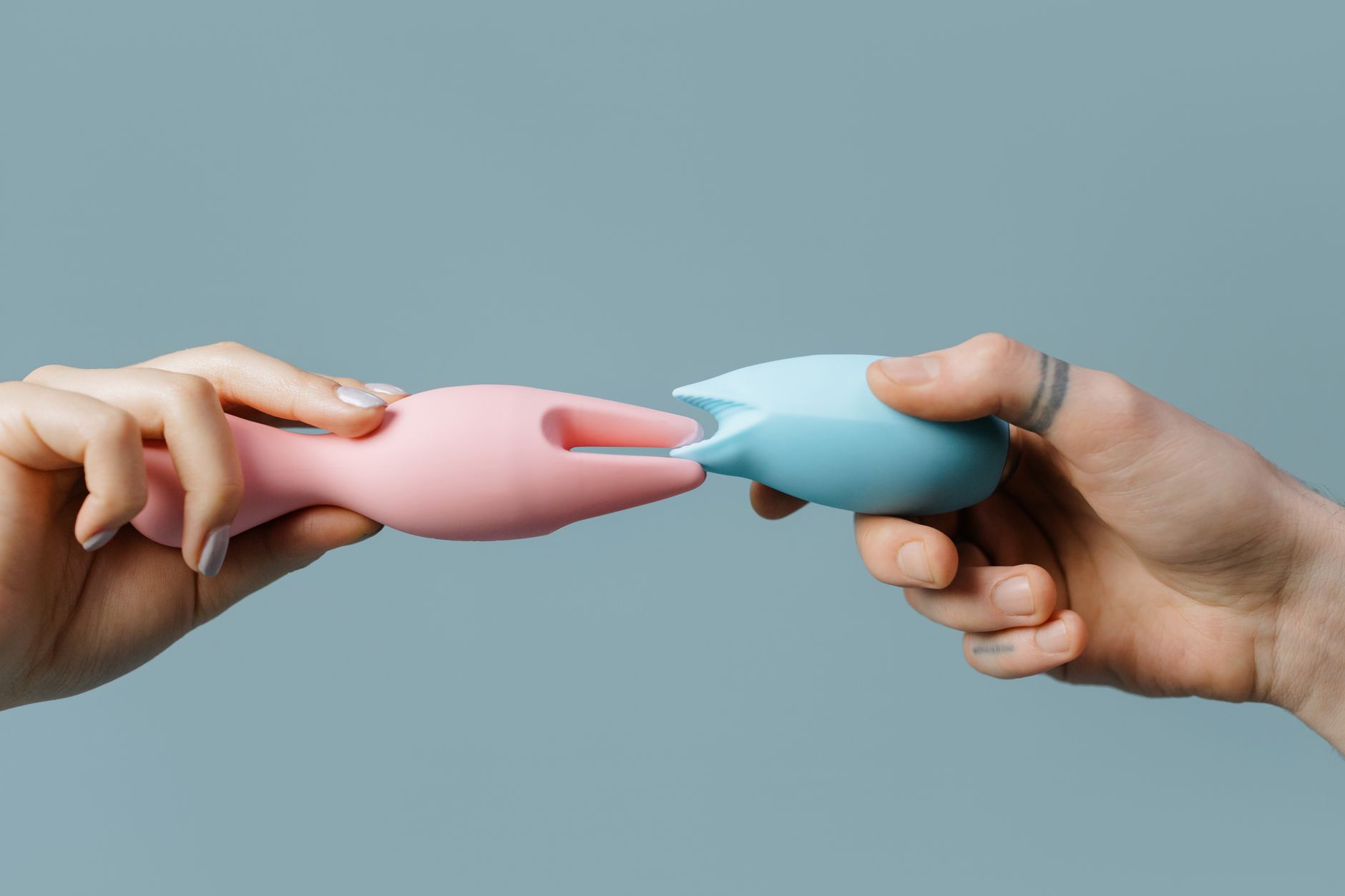
You switch birth control. A few weeks later, something feels off. Your lemon clitoral vibrator that always worked reliably suddenly takes longer to build sensation. Or it feels too intense. Or your arousal just... doesn't arrive the way it used to.
You're not imagining it. Hormonal birth control doesn't just prevent pregnancy. It rewires how your nervous system responds to touch, how fast your body floods with blood, and how intense sensation needs to be to feel satisfying.
Hormonal birth control works by suppressing ovulation, but the collateral shifts are profound. Progestin and ethinyl estradiol (or other synthetic hormones) lower your body's natural testosterone and raise sex hormone-binding globulin, a protein that binds to testosterone and makes it less available to your tissues.
Lower bioavailable testosterone means fewer androgen receptors firing up in the genital tissue. This has real downstream effects. You might notice:
Slower arousal buildup (that 5-minute warm-up now takes 15)
Reduced genital engorgement (less blood rushing to the clitoris and vulva)
Decreased orgasmic intensity or altered orgasmic sensation
Shifts in what pattern or intensity feels best on a lemon vibrator
These changes aren't linear. They vary by the type of contraceptive, the dose, how long you've been using it, and your individual hormone sensitivity. Some people on hormonal birth control report deeper orgasms and more consistent arousal. Others feel flattened. Most experience something in between, and it shifts over time.
When you first go on the pill, patch, or ring, your body is adapting to a new hormone baseline. For the first 3-6 weeks, many people notice sensation feels muted or delayed. This isn't failure. Your nervous system is recalibrating.
If you've been using a lemon sucker or clitoral vibrator regularly before starting birth control, don't assume your settings will be the same. You might need to experiment.
Usually, sensation stabilizes by month two or three. If it doesn't, and you're feeling flat or unresponsive, that's worth mentioning to your doctor. Some birth control formulations are less suppressive of testosterone than others. Norethindrone-based pills, for example, tend to preserve more androgen activity than levonorgestrel formulations. Your provider can help you find one that works better for your body.
Here's where it gets interesting. When you stop hormonal contraception, your testosterone levels rebound. This usually happens within 2-4 weeks, but the full hormonal rebalancing takes longer.
Many people report that sensation increases noticeably after stopping birth control. Arousal builds faster. Orgasms feel sharper or more frequent. If you'd been using a lower-intensity setting on your lemon vibrator while on hormonal birth control, you might suddenly find it's too much. You'd need to dial down to a gentler pattern, at least for a few weeks until your new hormonal baseline settles.
The catch is timing. If you come off hormonal contraception right before your period, the progesterone withdrawal can amplify sensation even more. Some people love this. Others find it overwhelming. If you're sensitive to intensity, stagger your experimentation. Don't expect your pleasure response to be the same the moment you stop taking the pill.
Swapping from one birth control formulation to another is where things get genuinely unpredictable. You're not stopping entirely, so there's no full rebound. But you're shifting your hormone profile, and that shift can arrive suddenly.
Swapping from a higher-dose pill to a lower-dose one often increases sensation and arousal. The opposite is true if you move to a higher-dose formulation. Switching from the pill to the implant, which releases a different progestin in different amounts, can feel like starting over.
Your nervous system doesn't care what you intellectually know about your contraceptive. It only knows that its hormone environment just changed. Sensation patterns you've relied on might feel different. Sometimes better. Sometimes you need a two-week adjustment period before you can fairly judge what's changed.
There's a layer beneath the physical sensation piece. Hormonal birth control also affects your psychological arousal. Lower androgens can reduce spontaneous desire. Some people on certain formulations report feeling genuinely less interested in sex, not just less responsive to touch.
This is different from sensation changes. You can have sharp, clear sensation but feel no motivation to pursue it. If you notice this after starting a new contraceptive, it's real and worth addressing. Again, switching formulations or even contraceptive types can help.
Meanwhile, if you're in a relationship, this is worth naming early. If your desire seems lower and your partner isn't aware that you've just changed birth control, they might interpret the change as about them. It's not. It's physiology.
If you're navigating a birth control shift right now, here's what actually helps:
Give yourself 6-8 weeks before you decide anything is wrong. Your nervous system needs time to acclimate to a new hormone regime. If sensation feels flat at week two, sit with it. Most people stabilize by week six.
Experiment with your lemon clitoral vibrator settings, not your expectations. If you usually use pattern three on your device, try pattern one or two for a week. Let yourself rebuild from a lower baseline. This also helps you discover nuances in sensation you might have missed before.
Use more lubricant during the transition. Even if your natural lubrication hasn't changed, adding external lubrication reduces friction intensity and can make sensation feel more comfortable while your tissue sensitivity is shifting.
Track patterns, gently. Over the next two weeks, notice what patterns feel good on which days. You might find that sensation is more responsive right after your period, or that certain times of day feel different. This isn't overthinking. It's gathering information.
Consider the bigger picture. If you're switching birth control at the same time as a relationship change, work stress, or a medication shift, you've got multiple hormonal variables in play. Isolating what's caused by what is nearly impossible. Be patient with yourself.
If after six weeks your sensation has flattened and isn't recovering, or if you've lost desire entirely and it's affecting your quality of life, bring this up with your prescribing provider. This is a legitimate reason to switch.
If you've been on the same hormonal contraceptive for years and suddenly sensation is changing, that's worth exploring too. Sometimes it's just normal variation. Sometimes your body's sensitivity to your current formulation shifts over time.
There are also non-hormonal options. Copper IUDs don't suppress testosterone at all. Some people find that switching to non-hormonal contraception restores sensation they didn't realize they'd lost. This is information worth having.
Choosing contraception is often framed as purely medical. Which option prevents pregnancy most reliably? What fits your lifestyle? Those are important questions. But sensation and desire deserve space in that conversation too.
Your pleasure matters. Not as an afterthought, but as part of your overall wellbeing. If a particular birth control consistently dampens your sensation or desire, that's a real cost. Other options might serve your contraceptive needs while letting you feel more like yourself.
The changes you notice with your lemon vibrators aren't failures or oversensitivity. They're signals. Listen to them. Your body knows what it needs.