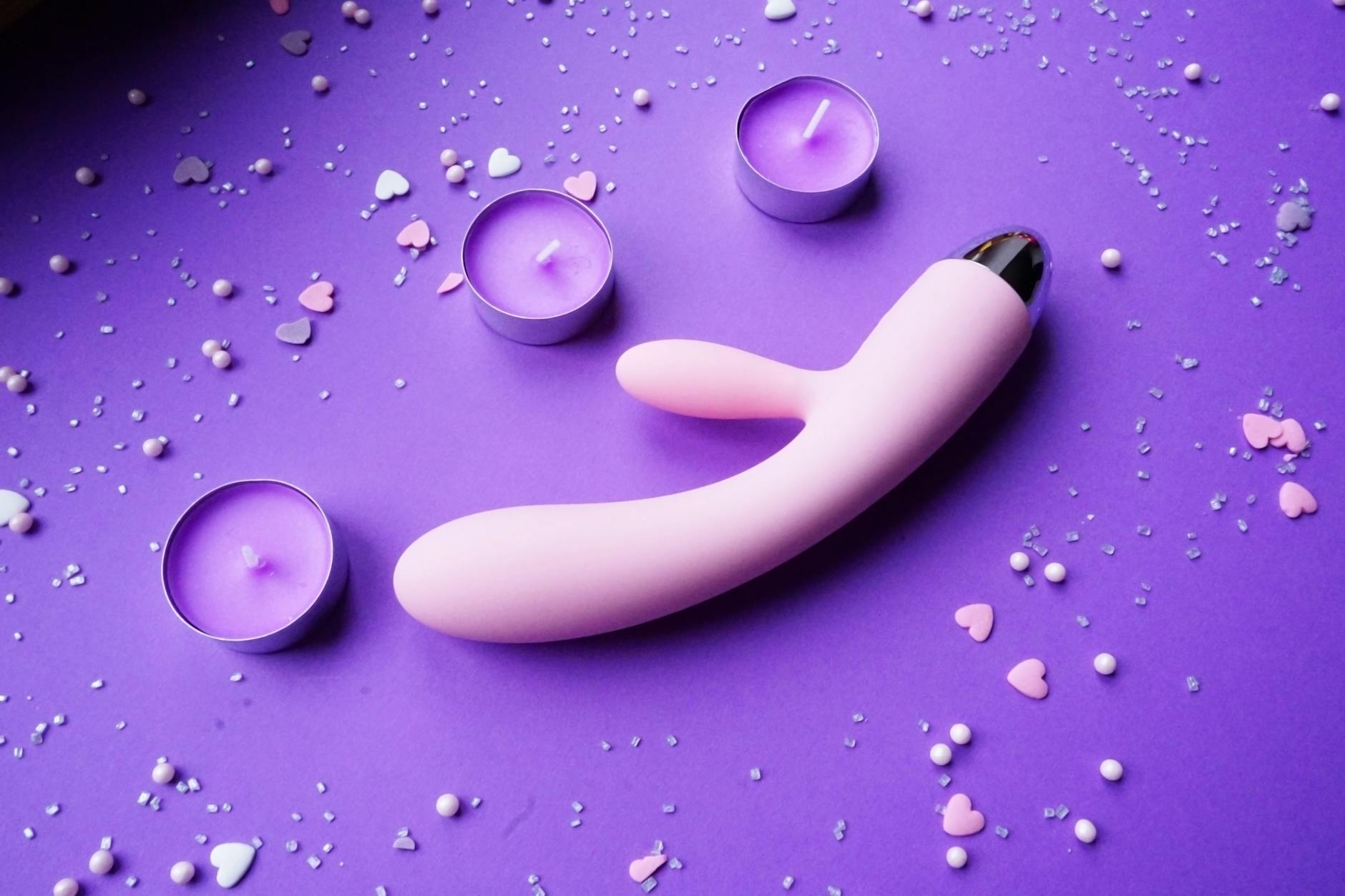
How to Use Lemon Vibrators When You Have Vaginismus or Penetration Anxiety
Clitoral toys like the Lem work differently for vaginismus. Why suction-based stimulation bypasses the pelvic floor reflex and helps you rebuild pleasure on your own terms.
Let's be real: if you have vaginismus or penetration anxiety, most sex toy advice is useless. It's written for people who don't have a pelvic floor that involuntarily locks shut. It assumes pleasure and penetration are the same thing. They're not.
Here's what changes when you use a clitoral vibrator like the Lem instead of anything internal. Your nervous system gets to opt out of the threat response. Pleasure stays separate from the thing that scares you. That separation is everything.
Vaginismus isn't a choice. It's a reflex. Your pelvic floor muscles tighten involuntarily, usually in response to penetration, pressure, or even the anticipation of it. That reflex is protective. Your body learned it for a reason—sometimes trauma, sometimes pain, sometimes just years of anxiety narrowing into a physical response.
But here's the thing: that reflex doesn't control the clitoris. The clitoral nerve (the pudendal nerve) has its own pathway. Stimulating it doesn't trigger the same protective mechanism that locks down the vaginal opening.
This is why external clitoral vibrators work differently for people with vaginismus. You get arousal, orgasm, and pleasure without the neurological message that says "this is a threat." Your nervous system can stay calm while your body wakes up.
Lemon vibrators like the Lem use suction and gentle pulsing on the clitoris and vulva. They don't go inside. They don't ask anything of your pelvic floor. This matters more than it sounds.
When you're working with vaginismus, internal stimulation—even something designed to be gentle—can trigger the reflex without you intending it. Your body responds before your mind can negotiate. A lemon sucker changes that equation. It gives you sustained, focused stimulation on tissue that's almost always accessible, even when your pelvic floor is tight.
The other advantage: lemon vibrators build arousal gradually. Suction creates a steady, spreading sensation rather than in-and-out motion. That rhythm is gentler on your nervous system. It doesn't mimic the penetration pattern that typically triggers vaginismus.
If you're using a lemon clitoral vibrator for the first time with vaginismus, here's the sequence that works best.
Start in a safe position. Lie down, propped on pillows, or sit in a comfortable chair. Avoid any position that reminds you of medical exams or penetration readiness. Your nervous system needs to feel genuinely safe, not compliant.
Use plenty of water-based lubricant. Even though the Lem doesn't go inside, a little lube makes the suction more comfortable and prevents any pinching sensation. It also signals to your body that this is play, not an attempt at penetration.
Start with the lowest setting. Set the Lem to pattern 1 or 2. The goal isn't intensity. It's novelty without overwhelm. Let your nervous system register this as different from penetration attempts.
Keep it external for now. The clitoris, the labia, the outer vulva. Avoid anything near the vaginal opening until you're already aroused and feeling safe. This removes the anticipatory anxiety that usually locks down your pelvic floor.
Set a time limit. Give yourself 15 to 20 minutes, no expectations attached. Orgasm is not the goal. Feeling sensation without fear is.
After a few sessions, something shifts. Your nervous system starts to separate "clitoral pleasure" from "penetration threat." That boundary is crucial. It rewires the automatic response that makes your pelvic floor clench.
Most people find that after about two weeks of regular use, arousal builds faster. The initial spike of anxiety when you start diminishes. Your body learns that this particular stimulation doesn't require the protective reflex.
At this point, some people naturally want to explore a little more. You might notice you're curious about inserting a finger, or you might not. Either way is fine. The point is that it becomes a choice you're making from a calm nervous system, not a reflex you're fighting.
That's the real shift. Vaginismus isn't about willpower. It's about nervous system state. Once you decouple pleasure from the threat response, the pelvic floor often relaxes on its own.
If you have a partner and you want them involved, timing matters. Use a lemon vibrator solo first. Get to the point where you can feel genuinely aroused and comfortable with the sensation. This usually takes three to four weeks of regular use.
Then, your partner's role is to be present without agenda. You use the Lem while they're with you. They might touch your shoulders, hold your hand, offer water. The point is that they're learning what your body responds to while you're still in control of stimulation.
Later, they might hold the vibrator for you. But that's step three or four. First comes your nervous system getting familiar with pleasure that's separate from penetration. Everything else builds from there.
Vaginismus didn't develop overnight. It won't reverse overnight either. But lemon clitoral vibrators skip the part where you're fighting your own body. They let you build arousal and pleasure while your nervous system gradually learns that this specific sensation is safe.
Some people find that after consistent use over two to three months, they become curious about penetration. Others don't. Both are fine. The goal is reclaiming pleasure, not achieving penetration on a timeline.
A clitoral vibrator is a useful tool, but it's not therapy. If vaginismus is connected to trauma, anxiety disorder, or past pain, working with a pelvic floor physical therapist or sex therapist alongside toy use is worth it. They can help your nervous system recalibrate while you're building new associations with arousal and your own body.
A pelvic floor PT can teach you relaxation techniques that accelerate the retraining process. A therapist can help if anxiety or intrusive thoughts are fueling the response. Tools work better with support.
Vaginismus tells you something important: your nervous system is in protection mode. A lemon vibrator doesn't force your body past that. It works alongside it. It lets you experience pleasure without asking your pelvic floor to soften first. That's the genius of external clitoral stimulation. Your arousal can grow while your nervous system stays calm. And from there, everything else becomes possible—if you want it to.
Absolutely. That's actually the main advantage. Lemon clitoral vibrators don't require pelvic floor relaxation. They work on the clitoris, which has its own nerve pathway. Your pelvic floor can be completely tight, and you'll still feel sensation and arousal. This is why external clitoral toys are often the first tool people with vaginismus use successfully.
It varies, but most people notice a shift in four to six weeks of regular use. Your nervous system learns that this specific stimulation isn't a threat. Anxiety at the start of a session usually decreases noticeably. Deeper healing often takes longer, especially if trauma is involved, but the tool itself works relatively quickly.
It might, or it might not. A clitoral vibrator is valuable regardless. Some people use them consistently and never pursue penetration. Others find that as arousal and confidence build, curiosity about penetration emerges naturally. Don't treat the vibrator as a stepping stone to something else. It's complete on its own. Penetration is a separate conversation, to be explored only if you actually want it.
Yes. In fact, many people find that external clitoral stimulation is especially helpful when anxiety is high, because it doesn't ask your body to do anything difficult. However, if you're on antidepressants that affect sensation, you might need longer warm-up time or higher settings. Start low and adjust. Pleasure is still absolutely possible.
That's common, especially if vaginismus comes with dissociation or chronic tension. Give it time. Your nervous system might be so guarded that it's blocking sensation as part of the protection mechanism. After a few sessions, numbness usually starts to lift. If it doesn't after four weeks, a pelvic floor PT can help, and you might explore whether medication or trauma work is needed.
Yes, as long as you clean it properly between uses. Water-based lube, warm soapy water, and air dry. No need for separate toys. If you're worried about comfort or hygiene, silicone toys are easy to sanitize—just wash thoroughly or boil for a few minutes. The Lem and other lemon vibrators are made from body-safe silicone, so they can handle it.
American College of Obstetricians and Gynecologists (ACOG). (2020). Vaginal relaxation procedures. Retrieved from https://www.acog.org
Reissing, E. D., Binik, Y. M., Khalifé, S., Cohen, D., & Amsel, R. (2003). Etiological correlates of vaginismus: Sexual and physical abuse, sexual knowledge, sexual interest, and relationship adjustment. Journal of Sex & Marital Therapy, 29(1), 47-59.
Porge, S. W. (2011). The Polyvagal Theory: Neurophysiological foundations of emotions, attachment, communication, and self-regulation. W.W. Norton & Company.
De Kruiff, M. E., Ter Kuile, M. M., Weijenborg, P. T., & van Lankveld, J. J. (2000). Vaginismus and dyspareunia: Relationship with general and sex-related coping. Journal of Sex & Marital Therapy, 26(3), 217-231.
Van Lankveld, J. J., Granot, M., Schultz, W. W., Binik, Y. M., Brauer, M., Gehrke, A. I., ... & Tertilt, C. (2015). Women's sexual pain disorders. The Journal of Sexual Medicine, 12(7), 1606-1627.